What Does a DOL Doctor Do in OWCP Injury Claims?
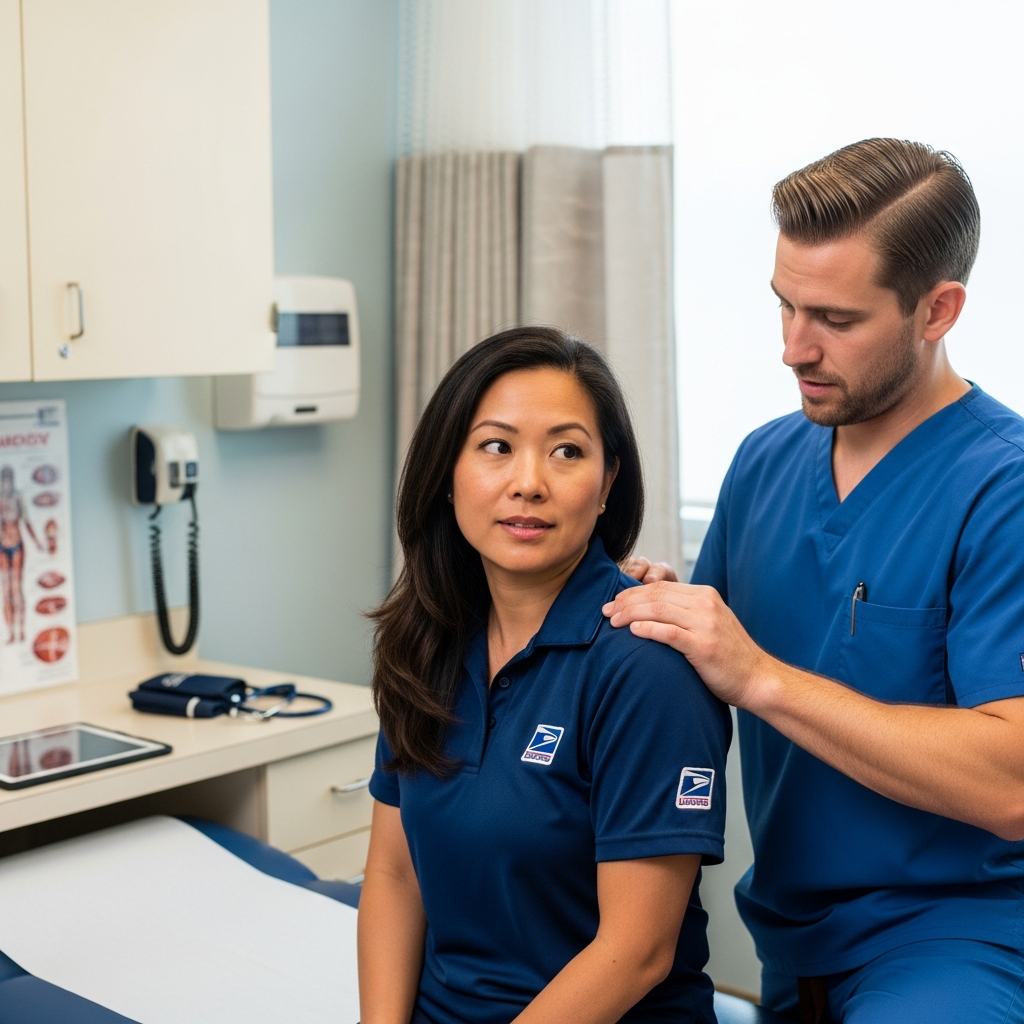
You’re sitting in your doctor’s office, finally getting your work injury looked at after weeks of putting it off. The pain in your back has been getting worse since that incident at the warehouse, and you know you need to file an OWCP claim. Your doctor nods sympathetically, examines you thoroughly, and then says something that stops you cold: “I’m sorry, but I can’t treat you for this injury.”
Wait… what?
You’re confused. Frustrated. Maybe even a little angry. This is your regular doctor – the one who’s treated your family for years, who knows your medical history inside and out. How can they just… refuse to help you when you’re injured?
Welcome to one of the most bewildering aspects of the federal workers’ compensation system. It’s not that your doctor doesn’t want to help you (though I know it feels that way). It’s that treating OWCP injuries requires something special – something called DOL authorization. And without it? Well, your trusted family physician’s hands are basically tied.
Here’s the thing that nobody really explains upfront: when you get hurt on the job as a federal employee, you’ve entered a completely different medical universe. It’s like Alice falling down the rabbit hole, except instead of tea parties and talking cats, you’re dealing with acronyms, authorization numbers, and a whole cast of doctors you’ve never heard of before.
DOL doctors – that’s Department of Labor doctors, by the way – are the special players in this system. They’re the ones who can actually examine you, treat you, and help move your claim forward. But (and this is a big but) they’re not just any doctors who decided to hang up a shingle. There’s a whole process, specific requirements, and… well, let’s just say it’s more complicated than choosing your dinner from a menu.
I’ve seen so many federal employees get completely blindsided by this. You’d think someone would explain it better upfront, right? You file your CA-1 or CA-2 form, you’re dealing with all this paperwork, and then suddenly you’re told you need to see a “DOL authorized physician.” It’s like being handed the keys to a car and then discovering you need a special license to drive it.
The frustrating part? This information gap can actually hurt your case. I’ve watched people waste precious time – weeks, sometimes months – trying to get treatment from doctors who can’t legally help them with their work injury. Meanwhile, their condition might be getting worse, their claim is stalled, and they’re probably stressed out of their minds wondering why everything is so complicated.
That’s exactly why understanding DOL doctors matters so much for your situation. These aren’t just bureaucratic hoops to jump through (though, let’s be honest, there are plenty of those in the OWCP system). DOL doctors are actually your gateway to getting proper treatment and building a strong case for your injury claim.
Think of them as the translators between your medical reality and the federal compensation system. They speak both languages – they understand your injury AND they know how to document it in ways that OWCP will actually accept and process.
But here’s what I really want you to understand: not all DOL doctors are created equal. Some specialize in certain types of injuries. Others have more experience with complex cases. Some are fantastic at the medical side but maybe not so great at the paperwork piece. And yes, some are just… better than others at actually helping you get the care you need.
Over the next few minutes, we’re going to untangle this whole DOL doctor puzzle together. You’ll learn exactly what these doctors can and can’t do, how to find the right one for your specific situation, and – perhaps most importantly – how to work with them effectively to get your claim approved and your injury properly treated.
Because here’s the truth: understanding this part of the system can be the difference between a smooth claims process and months of frustration, delays, and unnecessary stress. And honestly? You’ve got enough to deal with already.
So let’s figure this out together…
The Players in Your OWCP Claim Drama
Think of your OWCP claim like a complex play with several key characters. You’ve got yourself – the injured federal worker. There’s OWCP (the Office of Workers’ Compensation Programs) acting as the director, calling the shots. Your treating physician is like your personal advocate, working to get you better. And then there’s this mysterious figure called the DOL doctor…
A DOL doctor – that’s Department of Labor doctor, by the way – is essentially OWCP’s medical consultant. They’re not your doctor, and honestly? They’re not really there to help you heal. I know that sounds harsh, but it’s important to understand their role from the get-go.
Why OWCP Needs Their Own Medical Opinion
Here’s where things get a bit counterintuitive. You’d think your own doctor’s word would be enough, right? After all, they’re the ones who’ve been treating you, examining you, watching your progress (or lack thereof). But OWCP operates more like an insurance company than a healthcare system – they need to protect the government’s financial interests while also ensuring legitimate claims get approved.
It’s like having a referee in a sports game. Sure, the players know what happened on the field, but you need that neutral third party to make the official call. Except… and here’s where it gets messy… the DOL doctor isn’t always as neutral as that referee metaphor suggests.
The Independence Question Mark
DOL doctors are supposed to be independent medical examiners. The key word there is “supposed.” In reality, they’re hired by OWCP, paid by OWCP, and – let’s be honest – they know who’s signing their checks. This creates what you might call a built-in bias, though officially, we’re not supposed to talk about that.
Think of it this way: if someone consistently approved every claim that came across their desk, how long do you think OWCP would keep using their services? It’s not that these doctors are necessarily corrupt or malicious – many are well-qualified physicians. But the system itself creates certain… incentives.
What Makes Their Opinion Special
Now here’s something that might frustrate you: under federal workers’ compensation law, a DOL doctor’s opinion often carries more weight than your treating physician’s opinion. I know, I know – it doesn’t make intuitive sense. Your doctor has been seeing you for months, maybe years. They know your case inside and out. But the DOL doctor examines you once for maybe 20 minutes and suddenly their word is gospel?
The legal reasoning goes something like this: your treating doctor has an ongoing relationship with you and might be more sympathetic to your situation. The DOL doctor, being “independent,” supposedly provides an objective medical assessment. Whether that independence actually exists in practice… well, that’s a debate for another day.
The Examination Experience
If you’ve never been to a DOL examination, picture this: you’ll likely wait longer than usual (these aren’t exactly known for running on time), and when you finally get in, the doctor might seem… distant. Clinical. They’re not there to provide comfort or reassurance – they’re there to gather information for OWCP.
The exam itself is often shorter than you’d expect. Remember, they’re not treating you – they’re evaluating you. Big difference. They’ll review your medical records beforehand, perform their examination, and then write a report that will significantly influence OWCP’s decisions about your claim.
When DOL Doctors Enter the Picture
You won’t encounter a DOL doctor right away. OWCP typically brings them in when there’s a dispute about your condition, when they’re questioning your treating doctor’s recommendations, or when they need to make decisions about things like returning to work or the extent of your disability.
Actually, that reminds me – sometimes OWCP uses DOL doctors proactively, almost like they’re shopping for the opinion they want. If your treating doctor says you can’t return to work, OWCP might send you to their doctor to get a second opinion. And if that second opinion happens to contradict your doctor… well, guess which one they’re more likely to believe?
It’s not a perfect system, and frankly, it can feel pretty adversarial when you’re the one caught in the middle of it all.
Getting Your Doctor on Board (It’s Easier Than You Think)
Look, I’ve seen people stress themselves into knots trying to figure out how to approach their doctor about becoming their DOL physician. Here’s the thing – most doctors actually appreciate having a clear framework to work within, especially when it comes to workplace injuries.
Start the conversation during a regular appointment, not when you’re rushed or in pain. Simply say, “I’ve filed a workers’ comp claim and I’d like you to be my treating physician under the Department of Labor guidelines. Are you comfortable with that?” Many doctors are already familiar with OWCP procedures, but if yours isn’t… that’s not necessarily a dealbreaker.
The key is bringing them the CA-16 form (Authorization for Examination and/or Treatment) as soon as you get it from your employer or claims examiner. This little piece of paper is like a golden ticket – it tells your doctor exactly what they need to know about billing, reporting, and treatment authorization. Without it? You might end up paying out of pocket initially.
What to Expect During Your First DOL Medical Appointment
Your first appointment as a DOL case is going to feel different from a regular doctor visit. Your physician will be more thorough – and I mean *thorough*. They’re not just treating your symptoms; they’re building a medical record that could influence your claim for years to come.
Come prepared with a detailed timeline of your injury. Write it down beforehand because adrenaline and pain can make you forget important details. Include when the injury occurred, what you were doing, how it felt immediately versus now, and any treatment you’ve received since. Your doctor needs to establish what we call “causal relationship” – basically, connecting your current condition to your workplace incident.
Don’t be surprised if they ask seemingly repetitive questions or want to document things that seem obvious to you. They’re creating a paper trail that protects both of you. Actually, that reminds me – always ask for copies of your medical records after each visit. You’ll thank me later when the claims examiner requests documentation.
Managing the Ongoing Relationship
Here’s where it gets interesting… your DOL doctor becomes something of a partner in your recovery, not just someone who writes prescriptions. They’ll need to submit periodic reports (usually Form CA-20) that detail your progress, work restrictions, and treatment plans.
Be honest about your limitations – this isn’t the time to be a hero. If lifting that box at work makes your back scream, tell your doctor exactly that. They need specific, measurable restrictions to put in their reports. Something like “no lifting over 10 pounds” is infinitely more helpful than “take it easy.”
And speaking of work restrictions… your doctor’s recommendations carry serious weight with both your employer and OWCP. Don’t pressure them to clear you for full duty if you’re not ready. I’ve seen too many people rush back to work only to re-injure themselves and complicate their claims exponentially.
Navigating the Paperwork Maze
Your DOL doctor will generate a lot of paperwork – and I mean a *lot*. Every form serves a purpose, though it might not be obvious at first. The CA-20 forms track your medical progress. CA-17 forms are for duty status reports. Bills go on specific OWCP forms, not regular insurance billing.
Here’s a insider tip: ask your doctor’s office to copy you on everything they send to OWCP. Most offices are happy to do this, and it keeps you in the loop about your own case. You’d be amazed how often documents get lost or delayed in the system.
If your doctor seems overwhelmed by the DOL requirements, gently suggest they contact OWCP directly at 1-866-692-7487. The customer service representatives are actually quite helpful – they want doctors to file correctly because it makes everyone’s life easier.
When Things Don’t Go According to Plan
Sometimes your chosen doctor can’t or won’t continue as your DOL physician. Maybe they retire, stop accepting OWCP cases, or you move. Don’t panic – you can change doctors, but you’ll need to get approval from your claims examiner first.
The process involves submitting a new CA-16 form and explaining why you need to switch. Valid reasons include moving, your doctor retiring, or needing specialized care your current physician can’t provide. What won’t work? Simply not liking your doctor’s personality or wanting someone who might give you a more favorable prognosis.
Remember, your DOL doctor is documenting your medical journey for what could be a very long-term claim. Choose wisely, communicate clearly, and maintain that relationship like the valuable partnership it is.
When Your DOL Doctor Says “No” – And What That Really Means
Here’s the thing nobody tells you upfront: your DOL doctor might not agree with your regular physician. It happens more often than you’d think, and honestly? It can feel like getting punched in the gut when you’re already down.
Your family doctor says you need surgery. The DOL doctor says conservative treatment. Your orthopedist recommends six months off work. The DOL doctor clears you for light duty next week. Suddenly you’re caught between two medical opinions, and one of them controls your benefits.
The solution isn’t to panic or assume the DOL doctor is out to get you. Instead, make sure you’re painting the complete picture during your examination. Don’t downplay your symptoms – but don’t oversell them either. Be specific about your limitations: “I can’t lift my coffee cup without shooting pain down my arm” tells a clearer story than “my shoulder hurts.”
The Documentation Nightmare (Because Someone Has to Say It)
Let’s be real – the paperwork surrounding DOL doctors is enough to make your head spin. You’ll get forms with names like CA-17, CA-20, and a dozen others that sound like robot designations. Your employer needs copies, OWCP needs originals, and somehow you’re supposed to keep track of it all while dealing with an injury.
Here’s what actually works: create a simple filing system. One folder for medical records, one for correspondence, one for forms. Take photos of everything with your phone before you send it – seriously, this has saved people months of headaches when documents mysteriously “disappear” in the system.
And that medical report your DOL doctor files? You have the right to get a copy. Ask for it. Read it. If something seems off or incomplete, you can request clarification or even a supplemental report.
When Geography Becomes Your Enemy
Sometimes the closest DOL doctor is three hours away. Or in the next state. Or booked solid for the next two months. It’s frustrating because you’re already dealing with an injury, and now you’re planning road trips for medical appointments.
OWCP is supposed to consider “reasonable” travel distance, but their definition of reasonable might not match yours. If the assigned doctor is truly impractical to reach, you can request a different physician – but you’ll need a legitimate reason beyond “it’s inconvenient.”
The workaround? When you do make that long trip, maximize it. Bring a comprehensive list of your symptoms, current medications, and how the injury affects your daily life. You don’t want to make that drive twice because you forgot to mention something important.
The Waiting Game That Drives Everyone Crazy
DOL doctors are busy. Really busy. They see OWCP patients alongside their regular practice, and scheduling can be… challenging. You might wait weeks for an appointment, then sit in the waiting room for two hours, then have a 15-minute exam that determines your financial future.
It’s maddening, but here’s what helps: bring entertainment, bring snacks, and bring patience. Use the waiting time to organize your thoughts about what you need to communicate. Write down key points if you need to – there’s nothing wrong with referring to notes during your appointment.
When Your DOL Doctor Seems Rushed
That 15-minute appointment I mentioned? It’s real, and it’s jarring when you’re used to spending more time with your regular doctor. DOL physicians often have packed schedules, and it can feel like they’re already mentally moving on to the next patient while you’re still explaining your symptoms.
The trick is preparation. Know your injury timeline. Know your current limitations. Know what treatments you’ve tried and what’s helped (or hasn’t). Think of it like speed dating, but for your medical care – you need to make every minute count.
Don’t be afraid to advocate for yourself if you feel rushed. A polite “I have one more important point about my symptoms” can buy you the time you need to ensure nothing crucial gets missed.
The Reality Check About Second Opinions
Sometimes you’ll disagree so strongly with your DOL doctor’s assessment that you’ll want to demand a second opinion. The good news? It’s possible. The less good news? It’s not automatic, and you’ll need solid medical grounds for the request.
OWCP will consider a second opinion if there’s a legitimate medical dispute – not just because you don’t like the first doctor’s conclusion. Having your treating physician provide detailed records supporting a different medical opinion can strengthen your case for additional evaluation.
What to Expect from Your First DOL Doctor Visit
You’re probably wondering what actually happens when you walk into that office. Here’s the thing – it’s usually pretty straightforward, though it might feel a bit clinical compared to your regular doctor visits.
The DOL doctor will review your medical records (they should have received these beforehand), ask about your injury, and examine you. They’re looking at range of motion, pain levels, functional limitations – basically trying to understand how your injury affects your daily work activities. The whole appointment typically takes 30-60 minutes, depending on the complexity of your case.
Don’t expect warm bedside manner necessarily. These doctors are doing a job, and while many are perfectly pleasant, they’re not your treating physician. They’re more like… well, think of them as a professional referee making calls based on what they observe.
Timeline Reality Check – This Takes Time
I wish I could tell you this process moves quickly, but that wouldn’t be honest. After your DOL doctor visit, you’re looking at several weeks – sometimes 6-8 weeks or more – before you see the official report. The doctor has to write up their findings, submit them to the Department of Labor, and then OWCP has to review everything.
And here’s something that catches people off guard: this might not be your only visit. If your condition changes, if there are questions about the initial assessment, or if you’re approaching maximum medical improvement, you might find yourself back in that office again down the road.
The waiting is honestly one of the hardest parts. You’re dealing with an injury, possibly unable to work normally, and then you have to sit tight while bureaucracy does its thing. It’s frustrating – I get that.
Reading Between the Lines of Your Report
When that report finally arrives, it can feel like reading a foreign language. The DOL doctor will address specific questions about work restrictions, treatment needs, and your prognosis. They might recommend additional treatment, suggest you can return to modified duty, or – and this is the one everyone dreads – indicate that you’ve reached maximum medical improvement.
Pay attention to the language they use. “Permanent partial disability” sounds scary, but it might just mean you have some ongoing limitations that can be managed. “Return to full duty” doesn’t necessarily mean you’re pain-free – it means they believe you can perform your job functions safely.
If the report seems to contradict what you’re experiencing… well, that happens more often than it should. Your treating doctor knows you better, has seen you over time, understands the nuances of your case.
What Happens When You Disagree
Let’s be real – sometimes the DOL doctor’s assessment doesn’t match your reality or your treating doctor’s opinion. Maybe they think you can lift 50 pounds when you can barely manage 20. Maybe they’re suggesting you can work full-time when you’re still having significant pain.
You’re not powerless here. You can request a second opinion (called a referee examination), though this adds more time to an already slow process. Your treating physician can also write a detailed letter explaining why they disagree with the DOL doctor’s findings.
Sometimes these disagreements work out in your favor, sometimes they don’t. The system isn’t perfect, and it can feel like you’re just a case number rather than a person dealing with real limitations.
Preparing for Next Steps
While you’re waiting for results, keep documenting everything. How are you feeling day to day? What activities are difficult? Are you improving, staying the same, or getting worse? This information becomes crucial if there are any disputes about your condition.
Stay in regular contact with your treating doctor. They need to know about the DOL examination and any recommendations that come from it. Sometimes there’s coordination needed between what the DOL doctor suggests and what your regular physician thinks is appropriate.
And here’s something practical – start thinking about what modifications might help you return to work if that’s the direction things are heading. Could ergonomic equipment help? Different duties? Reduced hours initially? Being proactive about solutions often works better than waiting for someone else to figure it out.
The process isn’t quick, it’s not always fair, but most people do eventually get through it. Just remember – this evaluation is one piece of your larger workers’ compensation claim, not the final word on your recovery or your future.
Finding Your Way Forward
Look, dealing with federal workers’ compensation can feel like you’re navigating a maze blindfolded. One minute you’re dealing with claim forms, the next you’re trying to understand why you need another medical evaluation. And somewhere in all of this complexity sits the DOL doctor – this somewhat mysterious figure who can significantly impact your case.
Here’s what I want you to remember, though… you’re not powerless in this process. Yes, the system feels overwhelming – honestly, it is overwhelming sometimes. But understanding your rights, knowing what to expect from these evaluations, and being prepared can make all the difference. It’s like the difference between walking into a job interview cold versus having done your homework first.
The DOL doctor isn’t your enemy, even though it might feel that way when you’re stressed about the evaluation. They’re there to provide an objective medical opinion, plain and simple. But that doesn’t mean you should just show up and hope for the best. Document everything. Bring your medical records. Be honest about your symptoms, but don’t downplay them either. This isn’t the time to be stoic.
And here’s something that might surprise you – many people don’t realize they can have their own treating physician submit detailed reports and opinions too. Your regular doctor, the one who’s been following your case from the beginning, their voice matters in this process. Sometimes we get so focused on what the DOL doctor might say that we forget we have our own medical advocates.
The reality is, whether you’re dealing with a back injury from a workplace fall or repetitive stress from years at a desk, your health and wellbeing matter more than any bureaucratic process. But here’s the thing – you can care about your health AND navigate this system successfully. They’re not mutually exclusive.
If you’re feeling lost in all of this… if the medical terminology is making your head spin, or if you’re worried about how an evaluation might affect your benefits – you don’t have to figure it out alone. Actually, trying to handle everything solo often creates more stress than it solves.
We work with federal employees every day who are dealing with these exact situations. People just like you who got hurt at work and are trying to get the medical care and support they deserve. We understand the OWCP system, we know what DOL doctors look for, and honestly? We’ve seen just about every scenario you can imagine.
Whether you’re preparing for your first DOL evaluation or you’re years into a claim that feels stuck, having someone in your corner who understands both the medical and administrative sides can change everything. We’re not here to make promises we can’t keep, but we are here to help you understand your options and advocate for yourself effectively.
You’ve already been through enough dealing with your injury and the initial claim process. Don’t let confusion about DOL doctors or evaluation procedures add unnecessary stress to your plate. Reach out, ask questions, get the support you deserve. Because at the end of the day, this is about getting you the care you need to heal and move forward.